
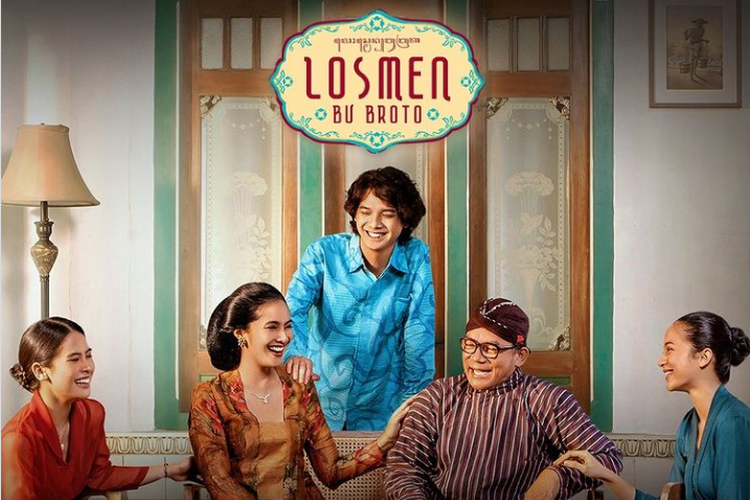
Have you watched the classic television series or the modern film adaptation of Losmen Bu Broto? If you have, you may have absorbed its deeper messages about family, cultural values, tradition, and the tension between heritage and modernity.
For film enthusiasts, cinema is more than entertainment. It is a medium for reflection and learning. After nearly two years of limited film production due to the COVID-19 pandemic, Indonesian cinema returned with renewed strength through films such as Losmen Bu Broto, directed by Ifa Isfansyah and Eddy Cahyono.
The film is a modern adaptation of the iconic Losmen Bu Broto television series from the 1980s, portraying the everyday dynamics of a humble family-run inn managed by Pak Broto and Bu Broto. Through this remake, the story revisits classic moral values while responding to the realities of modernization.
About the Film Losmen Bu Broto
Losmen Bu Broto is a drama film remade and produced through a collaboration between several creative industry players, including Ideosource Entertainment, Paragon Pictures, Fourcolours Films, and IDEOWORKS.
The cinematic version was officially released in Indonesian theaters on November 18, 2021. While rooted in traditional values, the film presents moral dilemmas that resonate strongly with modern audiences.
The soundtrack features a collaboration between Danilla Riyadi and Maudy Ayunda, further strengthening the emotional atmosphere of the film. Although the original series was set in 1980s Yogyakarta, the film shifts its timeline to 2021, blending traditional Javanese family values with a contemporary, millennial-influenced approach to managing the inn.
A Brief Review of Losmen Bu Broto
Written by Alim Sudio and produced by Andi Budiman, the film adapts the legendary TVRI series Losmen Bu Broto (1980). The narrative centers on unexpected family conflicts within a household that strongly upholds traditional values.
With a runtime of 113 minutes, the film stars Mathias Muchus as Pak Broto and Maudy Koesnaedi as Bu Broto. Supporting roles are played by Maudy Ayunda (Mbak Sri), Putri Marino (Mbak Pur), Baskara Mahendra (Tarjo), Danilla Riyadi, and Marthino Lio.
The story revolves around a modest inn managed by the Broto family, whose operational style reflects traditional Javanese values. Bu Broto and Pak Broto serve as the central figures, alongside their three children: Mbak Pur, Mbak Sri, and Tarjo.
Bu Broto embodies a strong matriarchal figure who governs both the inn and her children’s lives. Her character reflects deeply rooted Javanese traditions, evident in her kebaya attire, elegant demeanor, and unwavering adherence to cultural norms.
Mbak Pur, the eldest daughter, represents the traditional role of a firstborn, skilled in cooking and household responsibilities. Mbak Sri, the second daughter, is portrayed as intelligent and progressive, entrusted with managing technical and operational matters using modern approaches. Tarjo, the youngest, is a university student who also works as a tour guide for the inn’s guests.
As the story unfolds, conflicts arise between traditional management practices and modern ideas. Mbak Sri introduces digital systems, customized guest services, electronic ordering via tablets, and modern entertainment concepts, transforming the inn’s atmosphere. These changes, however, clash with Bu Broto’s firm belief in preserving tradition.
One of the most significant conflicts emerges when Mbak Sri’s passion for music and her relationship with an artist named Djarot challenge Bu Broto’s expectations. For Bu Broto, managing the inn with dignity and tradition represents a stable future, while artistic pursuits are viewed as uncertain.
Moral Values in Losmen Bu Broto
The film conveys moral values aligned with Thomas Lickona’s moral framework: knowing the good, loving the good, and doing the good. From the narrative, three core moral pillars emerge.
Knowing the Good – Allowing Space for Redemption
Self-reflection and growth are essential to moral development. In Losmen Bu Broto, conflicts serve as moments of awareness for both Bu Broto and Mbak Sri. Despite disagreements, both characters ultimately recognize the importance of family as a source of warmth and understanding.
Forgiveness becomes a central virtue. Bu Broto, as a parent, upholds tradition while still allowing Mbak Sri the space to reflect, return, and reconsider her life choices, demonstrating wisdom rather than authoritarian control.
Doing the Good – Becoming a Mediator in Conflict
During moments of tension between Bu Broto and Mbak Sri, Pak Broto and Mbak Pur act as mediators. They approach conflict by understanding both perspectives, embodying patience and balance.
Although Mbak Sri eventually leaves the inn, the family’s support remains constant. Pak Broto, portrayed as a calm and compassionate father and husband, represents emotional stability and moral clarity within the household.
Loving the Good – Fighting for Family
Bu Broto’s sacrifices reflect deep familial love. Her resistance to change stems not from control, but from fear of losing the moral foundation she believes protects her family.
To Bu Broto, preserving tradition is an act of love, an effort to shield her family from the uncertainties of modernization. Her values emphasize that loving goodness means protecting cultural roots while nurturing family unity.
